Loza-N GPR
Low-Frequency High-Energy Geophysical System
Loza-N is a low-frequency, high-energy pulsed electromagnetic geophysical system designed for deep subsurface investigation. It is intended for applications where conventional high-frequency GPR systems may not provide sufficient penetration, particularly in mineral exploration, deep hydrogeology, geological structure mapping, and other large-scale geophysical investigations.
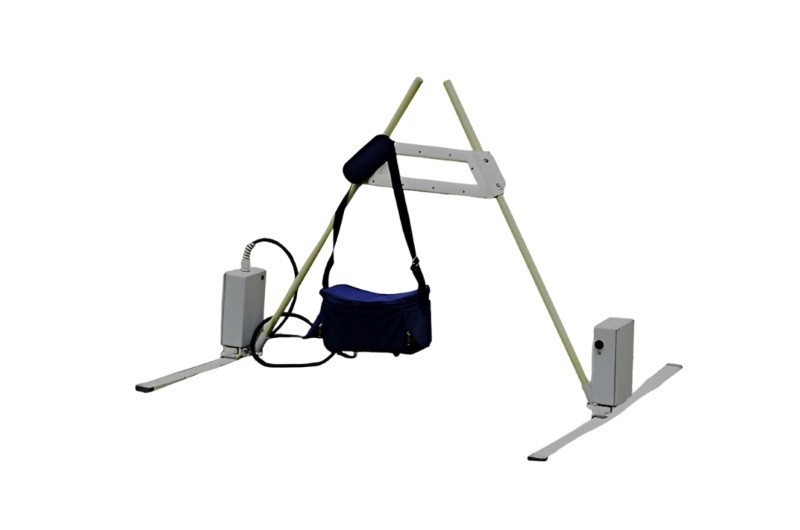
The system uses low-frequency resistively loaded dipole antennas combined with high-energy pulsed transmission. This configuration allows Loza-N to investigate deeper geological structures while maintaining sensitivity to subsurface boundaries, anomalies, and conductive or dielectric contrasts. The actual investigation depth depends on ground conductivity, moisture, geological conditions, antenna configuration, transmitter energy, and survey parameters.
Key Features
-
Low-frequency high-energy pulsed electromagnetic technology
-
Designed for deep subsurface investigation
-
Resistively loaded dipole antenna systems
-
Configurable antenna frequencies, including 25 MHz and 50 MHz configurations
-
Long recording time window of up to 4096 ns, depending on configuration
-
High-energy pulsed transmitter
-
Suitable for mineral exploration and deep hydrogeological surveys
-
Designed for operation in challenging geological environments
-
Suitable for structural and geological mapping
-
Field-deployable system for remote and difficult terrain
Deep GPR Investigation
Loza-N is designed around the principle that lower operating frequencies combined with higher transmitted pulse energy can improve penetration into the subsurface. This makes the system particularly suitable for investigations that require greater depth than conventional high-frequency GPR equipment can normally provide.
Published field studies have used Loza-N with 25 MHz antennas for geological and mineral exploration surveys targeting depths of up to approximately 200 meters under suitable conditions. However, this should not be considered a guaranteed detection depth because actual performance is strongly dependent on the electrical and geological properties of the survey area.
Low-Frequency Antenna System
Loza-N uses resistively loaded dipole antennas designed for low-frequency electromagnetic transmission and reception. Configurations including 25 MHz and 50 MHz antennas are documented for Loza-N surveys.
The lower-frequency configuration is particularly useful when greater penetration is required, while the selected antenna and transmitter configuration can be adapted to the geological conditions and investigation objectives.
High-Energy Pulsed Transmission
A major characteristic of Loza-N is its high-energy pulsed transmission system. Rather than relying on a conventional low-power continuous or repetitive waveform, the system generates short, high-energy electromagnetic pulses and records the returning subsurface response.
This high-energy approach, combined with low-frequency operation, is intended to improve subsurface penetration in conditions where attenuation can limit conventional GPR performance. Research literature describes Loza-N systems using transmitter configurations ranging from approximately 5 kV to 21 kV, depending on the system configuration.
Investigation Depth
Loza-N is designed for deep geophysical investigation, with the manufacturer reporting investigation depths of up to approximately 200 meters under favorable geological conditions.
Depth should always be regarded as site-dependent rather than as a fixed specification. Conductive clay, saline groundwater, high moisture content, mineralization, geological heterogeneity, antenna frequency, transmitter configuration, and target characteristics can all affect penetration and signal quality.
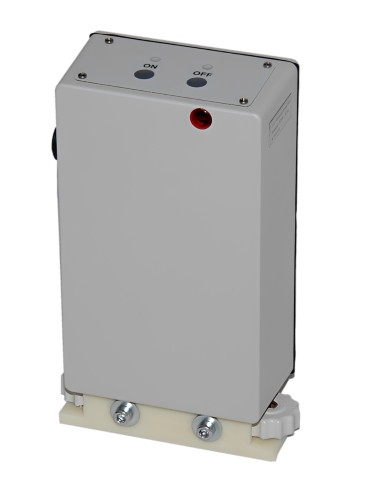
Loza-N Transmitter
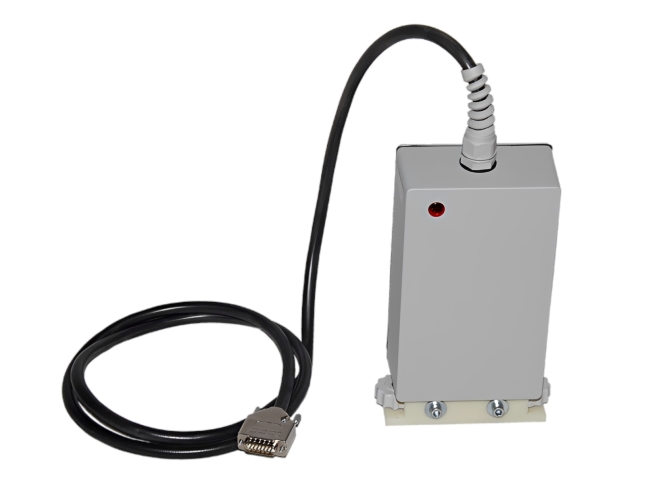
Loza-N Receiver
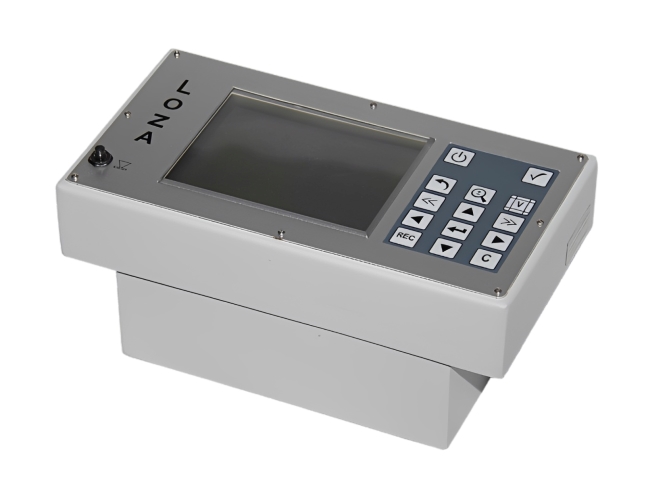
Loza-N Control Unit
Applications
Mineral Exploration
Loza-N can be used for geological and mineral exploration surveys where deep subsurface information is required. The system can help identify geological boundaries, structural features, anomalous zones, and other subsurface contrasts associated with mineralized environments.
Field studies have demonstrated Loza-N applications in mineral exploration, including surveys of ore-bearing geological structures.
Deep Hydrogeology
The low-frequency configuration of Loza-N makes it suitable for deep hydrogeological investigations and groundwater-related studies. Surveys can be used to investigate geological structures and subsurface conditions relevant to groundwater exploration.
Geological Structure Mapping
Loza-N can be applied to the investigation of faults, fractures, layer boundaries, cavities, geological contacts, and other structural features. The system is particularly useful where the investigation target extends significantly deeper than the normal operating range of conventional high-frequency GPR.
Mining and Engineering Geophysics
The system can be used for subsurface investigations in mining areas, geological engineering projects, and other applications requiring deep geophysical profiling.
Archaeological and Large-Scale Subsurface Surveys
Although Loza-V is generally better suited to shallow and higher-resolution investigations, Loza-N can be selected when the archaeological or geological target is located at greater depth and a low-frequency approach is appropriate.
Field Applications and Case Studies
Loza-N has been used in a range of geological environments and field conditions. A 2024 scientific study at the Mehdiabad calamine mine in central Iran used a 25 MHz Loza-N antenna to investigate mineralized zones, geological boundaries, and faults, with a target investigation depth of up to 200 meters.
Other documented applications include mineral exploration, coal deposit investigations, geological structure mapping, and surveys in difficult environments.
Data Acquisition
Loza-N records the electromagnetic response of the subsurface over an extended time window. Its long recording window is important for deep investigations because signals returning from greater depths require longer travel times.
The current GPR Investigation specifications list a recording time window of up to 4096 ns, depending on system configuration.
Technical Specifications
-
System Type: Low-frequency high-energy pulsed electromagnetic geophysical system
-
Typical Application: Deep subsurface investigation
-
Frequency Range: Low-frequency operation; documented configurations include approximately 25 MHz and 50 MHz antennas
-
Antenna Type: Resistively loaded dipole
-
Recording Time Window: Up to 4096 ns, configuration-dependent
-
Transmitter: High-energy pulsed transmitter
-
Documented Transmitter Voltage: Up to approximately 21 kV depending on configuration
-
Receiver Frequency Band: Approximately 1–50 MHz in documented configurations
-
Primary Applications: Mineral exploration, deep hydrogeology, geological structure mapping, engineering geophysics
-
Maximum Investigation Depth: Up to approximately 200 m under favorable conditions
-
Actual Depth: Dependent on ground and geological conditions
The technical configuration can vary according to the survey objective, antenna selection, transmitter configuration, and local ground conditions.
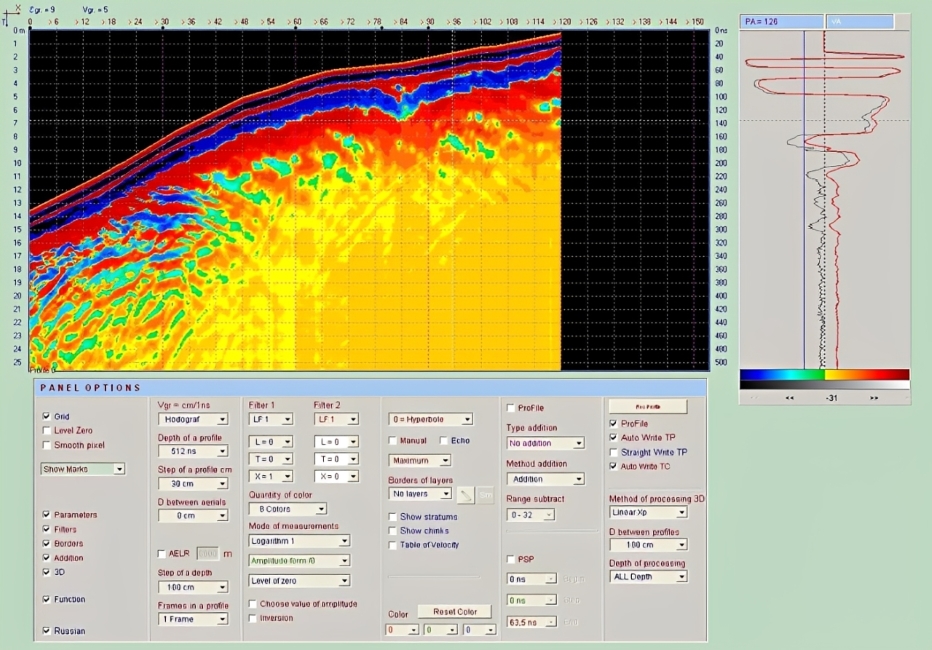
Krot Software
Loza-N vs Conventional High-Frequency GPR
Loza-N is intended for a different range of applications than conventional high-frequency GPR systems. High-frequency GPR generally provides higher spatial resolution but experiences greater attenuation in conductive ground. Loza-N uses lower frequencies and substantially higher pulse energy to prioritize penetration and deep investigation.
This makes Loza-N particularly relevant for mineral exploration, deep geological surveys, and hydrogeological investigations where the target may be located far below the surface.
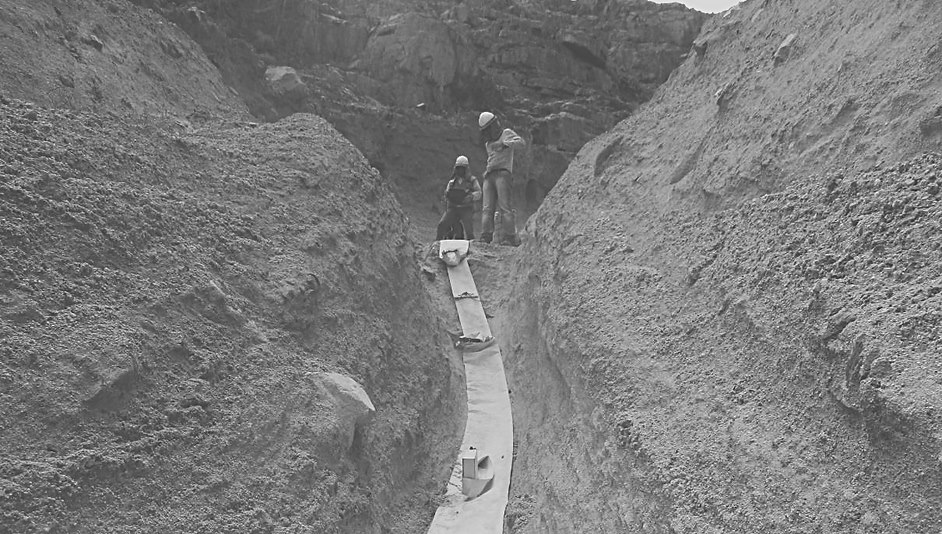
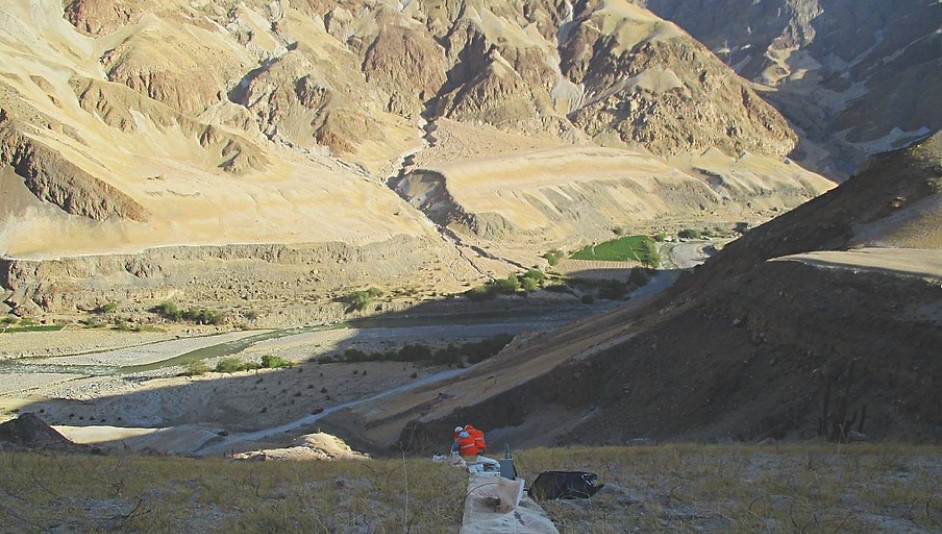
Loza-N — Field Configuration
Low-frequency antenna system and pulsed transmitter — configuration varies by project
Important Note About Detection Depth
The approximately 200 m figure represents a potential investigation depth under favorable conditions, not a guaranteed detection depth for every target or geological environment.
Actual results depend on soil and rock conductivity, moisture, clay content, mineralization, geological layering, target size and contrast, antenna configuration, transmitter energy, survey geometry, and data-processing methods.
For this reason, Loza-N should be selected and configured according to the specific geological conditions and investigation objectives of each project.