GPR Investigation
GPR Investigation is a geophysical company specializing in electromagnetic subsurface investigation for mineral exploration, hydrogeology, engineering geology, and archaeological research. Operating since 2006, the company combines field geophysics expertise with the development and application of Loza electromagnetic systems for challenging subsurface investigation projects.
The company's Loza technology is based on pulsed electromagnetic measurements and is designed to capture both early-time structural responses and later-time conductive responses within the same dataset. This dual-regime approach provides information about subsurface structures as well as conductive geological targets, making it useful for applications where conventional high-frequency Ground Penetrating Radar (GPR) may have limited penetration or where conventional electromagnetic methods may provide less structural information.
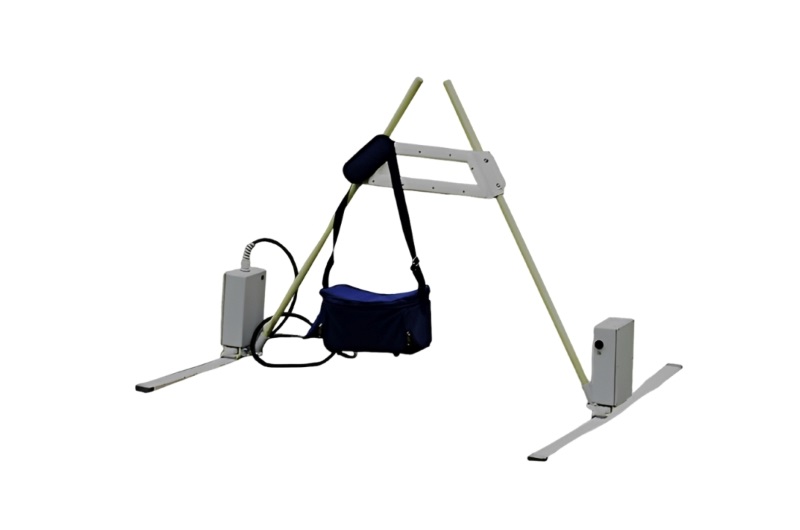
GPR Investigation works with the Loza product family, including the Loza-V and Loza-N electromagnetic geophysical systems. Loza-V is designed for shallow to moderate-depth investigations, including engineering geology, near-surface hydrogeology, archaeology, and infrastructure surveys. Loza-N is a lower-frequency, high-energy system intended for deeper investigations such as mineral exploration, hydrogeology, and structural mapping. Actual investigation depth depends on geological conditions, ground conductivity, target properties, and survey configuration.
The company's geophysical services cover mineral and base-metal exploration, groundwater and aquifer investigation, geotechnical surveys, subsurface void and cavity mapping, archaeological prospection, and geophysical and geological consulting. Its field experience extends across multiple geological and climatic environments, including projects in Africa, Europe, Asia, and South America.
GPR Investigation combines field data acquisition, geophysical processing, interpretation, and geological analysis to provide practical information for exploration and subsurface investigation projects. Its approach is particularly suited to complex environments where selecting the appropriate electromagnetic method, survey configuration, and interpretation workflow is essential for obtaining useful subsurface information.